

Chairman: Bruce Knecht, DMD
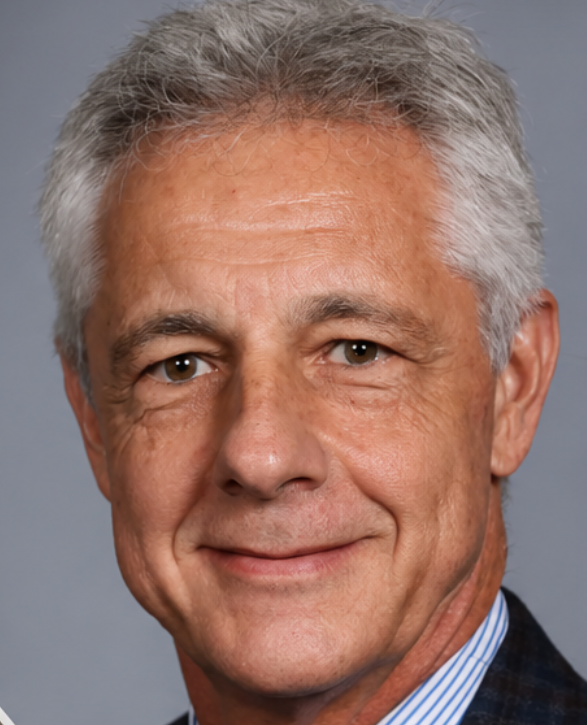
Dr. Bruce G. Knecht earned his Bachelor of Science in Biology, with a minor in Philosophy, from the University of Scranton in 1982. He completed his dental education at Fairleigh Dickinson University while serving in the Army National Guard.
Following his passion to practice in California, Dr. Knecht joined the United States Navy, where he served as a dentist for the Marine Corps in Twentynine Palms. During his service, he developed advanced skills in oral surgery while also earning his pilot’s license.
After returning to New Jersey, he joined a well-established practice in Spring Lake, where he gained extensive experience in full-mouth reconstruction and complex extractions. He later relocated to Florida, successfully obtaining licensure and continuing his practice in North Palm Beach.
Committed to lifelong learning, Dr. Knecht advanced his expertise in implant dentistry and became a Diplomate of the American Board of Implant Dentistry. He has co-chaired educational courses alongside Dr. Robert Miller and remains actively involved in clinical education.
Currently, Dr. Knecht serves as a mentor to emerging dentists in implant procedures with Heartland Dental in South Florida, where he is dedicated to advancing clinical excellence and patient care.
Outside of his professional work, Dr. Knecht enjoys spending time with his children and pursuing interests such as guitar, fishing, boating, aviation and lobster diving.
Co-Chairmen:
Richard Leong, D.D.S.
Mark Roberts, D.D.S.
Wolf Schwartz, D.D.S.
Tarek Assi, D.M.D.
Philip Kohn, D.D.S., Periodontal Consultant
John Stone, D.D.S., Prosthodontic Consultant
David Feinerman, D.M.D., M.D., Oral and Maxillofacial Surgery Consultant
Course Description
The clinic will have the morning with lecture and a lunch with a sponsored vendor (if no vendor scheduled then lunch is on your own). Lecture will be from 9-12 and make sure to sign in for CE credit.
The afternoon will be clinical and will start at 1:30-4:30. A new attendee is advised to stay in the lecture room with Dr. Leong and Dr. Stone for case studies and case presentations. The case presentation should have a Co-Chair assignment. The presentation is to make sure you are ready for the surgery and to help you create a successful experience for you and the patient. The presentation is in a power point format or through Claude AI. If there happened to be no presentation, then all go to observe in the clinic.
In addition, Dr. Garret Lipsey will spearhead our research. We have the patients to provide the research to the paper and the patients must sign consents to research. The doctors involved will help in the writing and publishing of the paper in selected journals. I would limit the participant doctors to six. Dr. Garret will lay out the format and assign different jobs as needed. Presently we are going to start a paper on “Miller Bone”.
The clinical portion will be monitored by your assigned co-chair. If a co-chair is not present, any of the non-assigned co-chairs can fill in or the chairman.
Patient treatment of the assigned students will be responsible to that patient between clinics and the summer break. If you start a case, the patient should have your contact information. Observers of any procedure should hold back loud comments that disturb the treating clinician and the patient to question their competency. If the student needs help, either ask them to take a break or ask if they would like help. We are all human and there should be no Ego’s in treatment or our patients.
Advanced Procedures
Complicated bone grafts, tissue grafts, sinus augmentation must be ready with materials and instruments. In these procedures, the chairman must also approve, including full arch restorations, sinus lifts, block bone grafts tissue grafts. It is my belief that the frequency of complicated procedures should be limited for volume of patients that clinic day and followed up with pre and post op instructions.
All students assigned to a patient should have each other’s contact information. The co-chair and student must maintain clinically accepted standards.
Case Presentation Standards
- Medical and Dental History
- Clinical photos before and after
- CBCT and other radiographic findings
- Diagnosis
- Treatment objectives
- Surgical and Restorative Treatment Plan
- Alternate options of treatment
- Potential Risks and Complications
- Materials and Instruments Needed
- Post op Management Strategy
The objectives of this presentation is to confirm and help the student fully prepare for a safe and predictable result.
All patients should have the doctor review the health history, know the BP, do a “Time Out Pause” confirm their name and the procedure with tooth number or numbers involved.
Vision
To guide our students to confidently place and restore dental implants in their respective offices, helping patients have improved dental health.
Mission
The course is to provide a structured educational environment that emphasizes patient safety, sound clinical judgement, evidence based clinical judgment, interdisciplinary collaboration and fostering predictable outcomes while fostering competent and confident clinicians.